
Shoulder pain: getting strength and movement back
Most shoulder problems, such as rotator cuff tendinopathies, improve with a targeted, progressive exercise programme, often without surgery. We help you understand where the pain comes from, reduce it and regain strength and movement for daily life, work and sport.
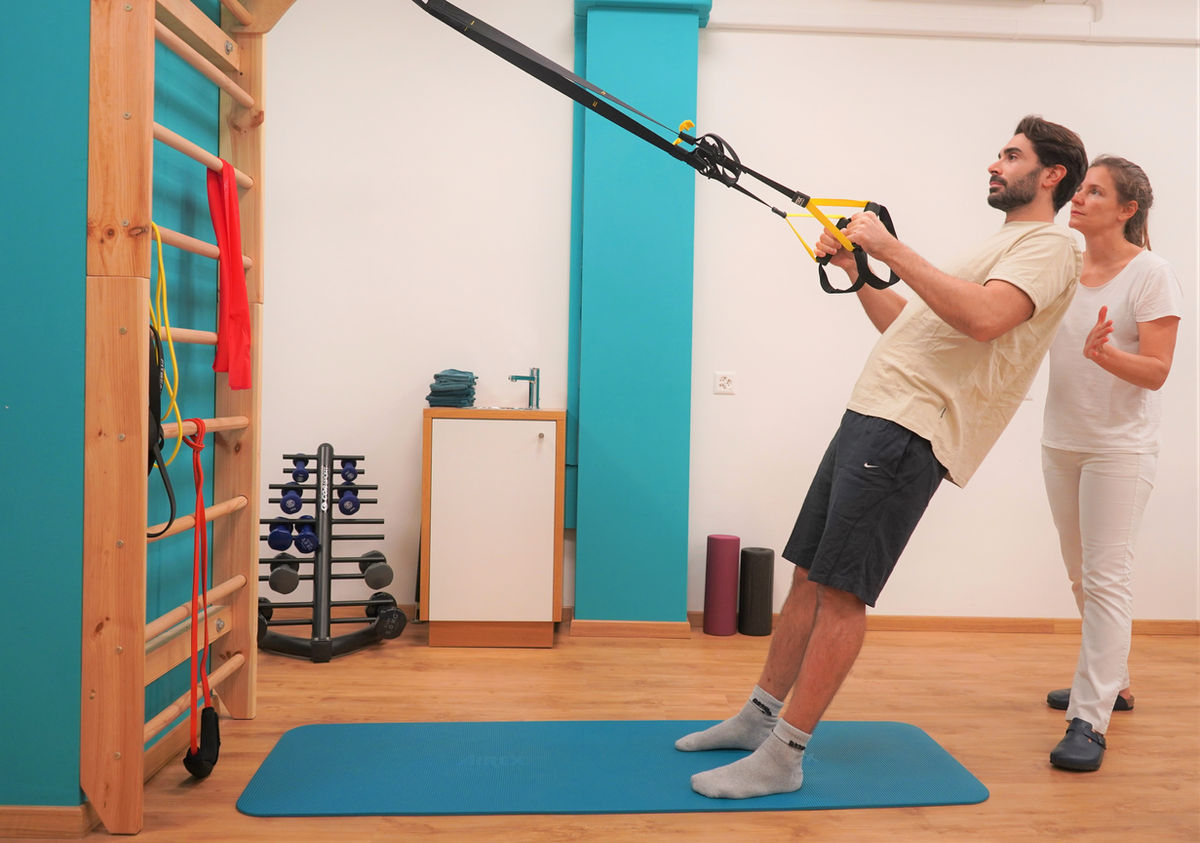
What we treat
From pain when you lift your arm to stiffness that keeps you awake, every shoulder problem starts with a thorough assessment.
- Rotator cuff Tendinopathies, "impingement" and partial tears: pain when you lift your arm or lie on your side.
- Calcific shoulder Calcium deposits in the tendons, often very painful. We can add shockwave therapy.
- Frozen shoulder Adhesive capsulitis: marked stiffness and night pain that develop over months.
- Pain at the front of the shoulder Long head of biceps tendinopathy and other problems at the front of the shoulder. Topic of Luca Barbisan's Master's thesis
- Instability and dislocation After a dislocation or when you feel your shoulder "slipping out".
- After surgery or a fracture Rotator cuff repair, stabilisation, shoulder replacement, fractures of the upper arm or collarbone.
How we work
- 01 Listening and assessment We listen to your story, rule out signs and symptoms that may need further investigation, and measure movement and strength.
- 02 Managing load We find out which movements irritate your shoulder and adapt them, without stopping you completely.
- 03 Progressive exercise Strengthening and restoring movement, with manual therapy when it helps and shockwave therapy when indicated.
- 04 Back to your activities We prepare your shoulder for the movements of your work or sport, with personal training if you want to keep going.
Three myths to bust
Sources: Teunis et al., Journal of Shoulder and Elbow Surgery, 2014 · Kukkonen et al., Bone & Joint Journal, 2014 · Diercks and Stevens, Journal of Shoulder and Elbow Surgery, 2004
When to see a doctor straight away
Contact your doctor or the emergency department straight away if you have:
- shoulder pain with chest tightness, shortness of breath or sweating: call 144
- a fall with deformity or sudden loss of strength
- a swollen, warm and red shoulder, with fever
- tingling or weakness in the arm that is getting worse
- a history of cancer and new shoulder pain
Frequently asked questions about shoulder pain
Content by Luca Barbisan, OMT physiotherapist, who wrote his Master's thesis (MAS SUPSI in neuromusculoskeletal physiotherapy) on long head of biceps tendinopathy · Updated October 2026
Do I need an ultrasound or MRI before starting?
Not always. A clinical assessment is often enough to plan treatment. If scans could change the decisions, we discuss it with you and your doctor.
How long does it take to heal?
It depends on the problem: tendons need weeks or months of consistent exercise. After the assessment we give you a realistic estimate and intermediate goals.
The pain keeps me awake at night: what can I do?
It often helps to avoid sleeping on the painful side and to support your arm with a pillow. During the assessment we give you advice suited to your situation.
Can I keep training?
In most cases yes, by adapting exercises and loads. We help you work out what to keep and what to change for a while.
Is physiotherapy for the shoulder covered by insurance?
Yes. With a medical prescription it is covered by basic health insurance, minus the deductible (franchise) and co-payment.
You might also be interested in
Is your shoulder holding you back? Let's talk.
Write to us on WhatsApp: we will get back to you to find a day and time together.
All we need to book is your name and availability: we go through the details of your health together at the practice.